DATA-BASED SUSTAINABLE URBAN MOBILITY PLANNING
Building a robust data foundation that starts taking hidden costs into account enables cities to tap into new potential for sustainable mobility planning.
Mobility is undergoing a profound transformation: population growth, urbanisation, and climate change are placing new demands on urban mobility planning. At the same time, new modes of transport and new forms of mobility also offer new opportunities for low-emission and demand-driven solutions.
HIDDEN COSTS IN URBAN MOBILITY PLANNING
If local authorities wish to fully leverage this potential in sustainable mobility planning, it is not enough to look solely at the investment costs that are usually taken into account. Hidden costs play a decisive role in determining the actual cost-effectiveness of mobility measures.
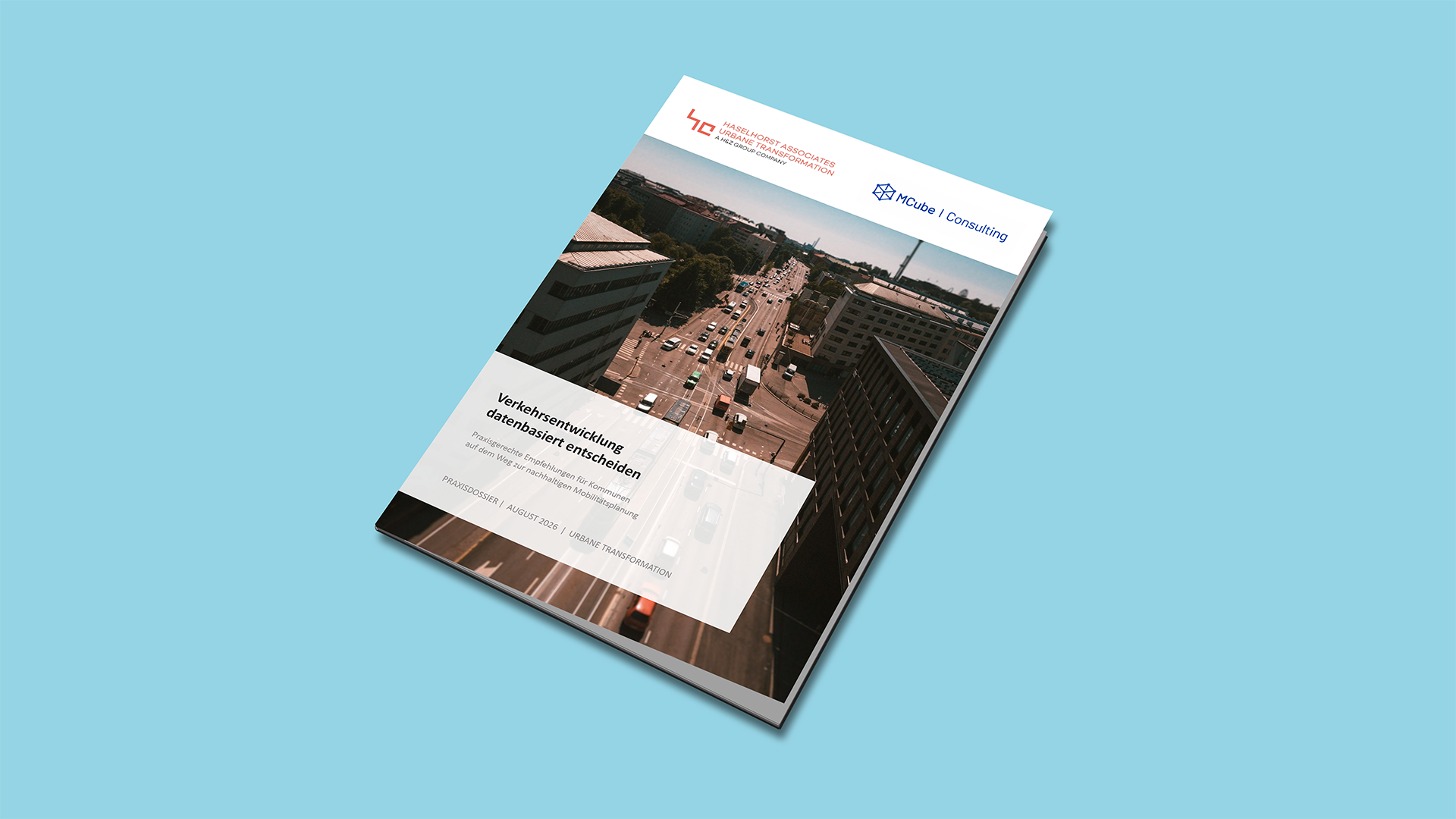
We have addressed these challenges in a practical dossier produced in collaboration with MCube Consulting. Here, policymakers will find an overview of the current state of transport planning in German municipalities, as well as an introduction to what is known as full-cost-based measure evaluation. This approach takes into account not only the traditional acquisition and implementation costs of measures, but also the at times invisible impacts of mobility on health, the environment, and time.
CASE STUDY: LANDSBERG AM LECH
In Landsberg am Lech, this methodology for sustainable mobility planning has already been implemented. The case study illustrates how this approach can generate savings for the municipal budget, which, given the tight budgetary situation in German cities and municipalities, is an additional benefit of data-driven transport planning.
The dossier concludes with specific guidelines designed to support city planners in implementing data-driven sustainable urban mobility planning.

“
As our data shows, progress is being made in shaping a sustainable mobility transition in German communities. However, without updating their transport development plans, cities will fail to realise their full potential. Yet there is also a very encouraging message here: by establishing a strong data foundation, it is possible to unlock an incredible amount of potential for sustainable mobility.
“

What's Inside
- New demands for urban mobility planning arising from new modes of transport and forms of mobility
- The state of transport planning in Germany, using data from our Smart City Ranking
- The hidden costs of mobility measures and methodological approaches for a full-cost-based assessment that takes internal and external costs into account
- The Mobi-Score as a local planning tool
- A practical example of how the full-cost methodology was implemented in Landsberg am Lech to prioritise transport measures
- Six practical guidelines for data-driven local transport planning
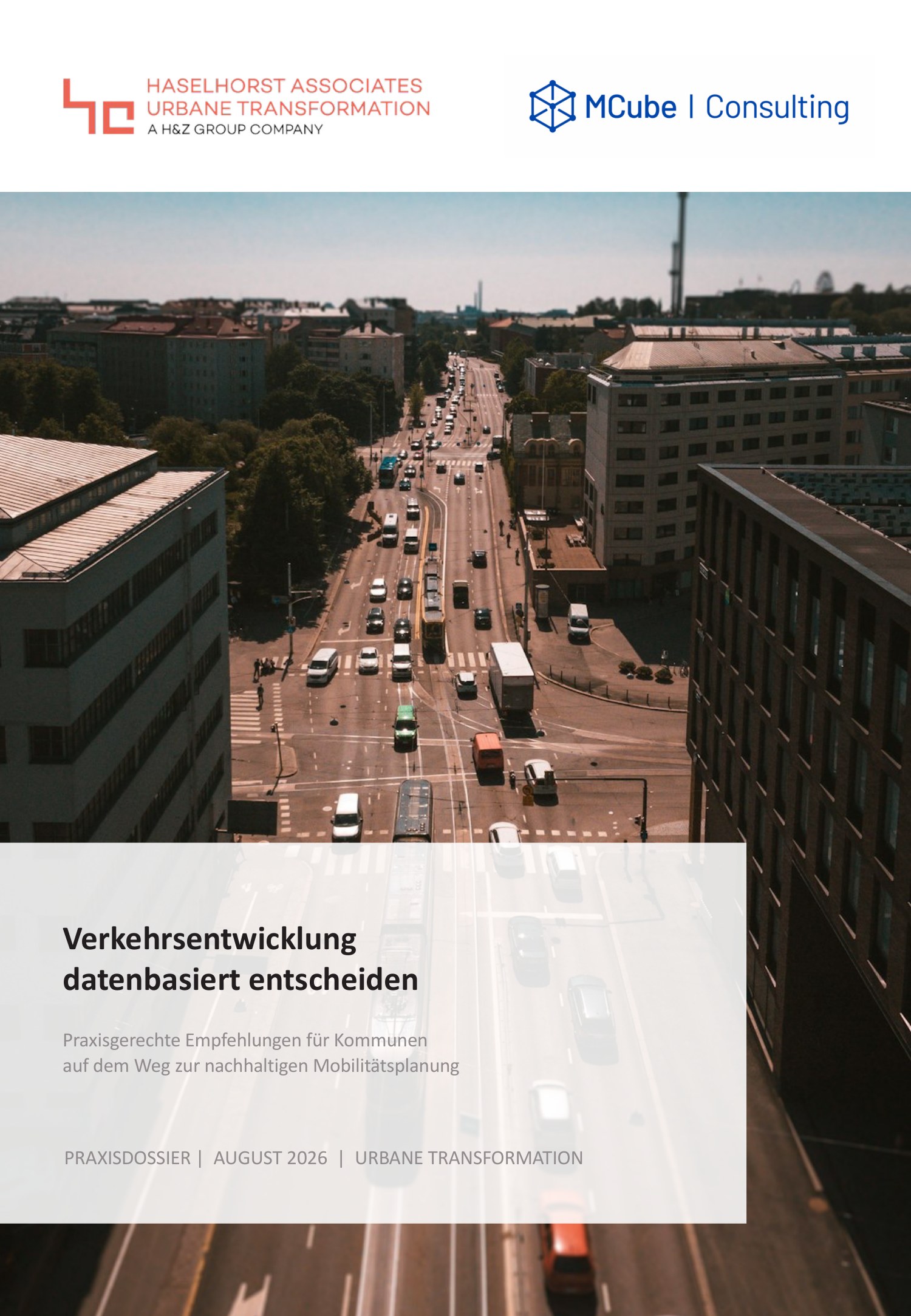
READ THE FULL PRACTICAL GUIDE
Gain insights into the changing landscape of urban mobility and its implications for transport planning in Germany. The full-cost approach not only takes social and environmental factors into account, but also enables savings for the local authority budget.
CONTACT OUR EXPERT
Dr. Lucia Wright