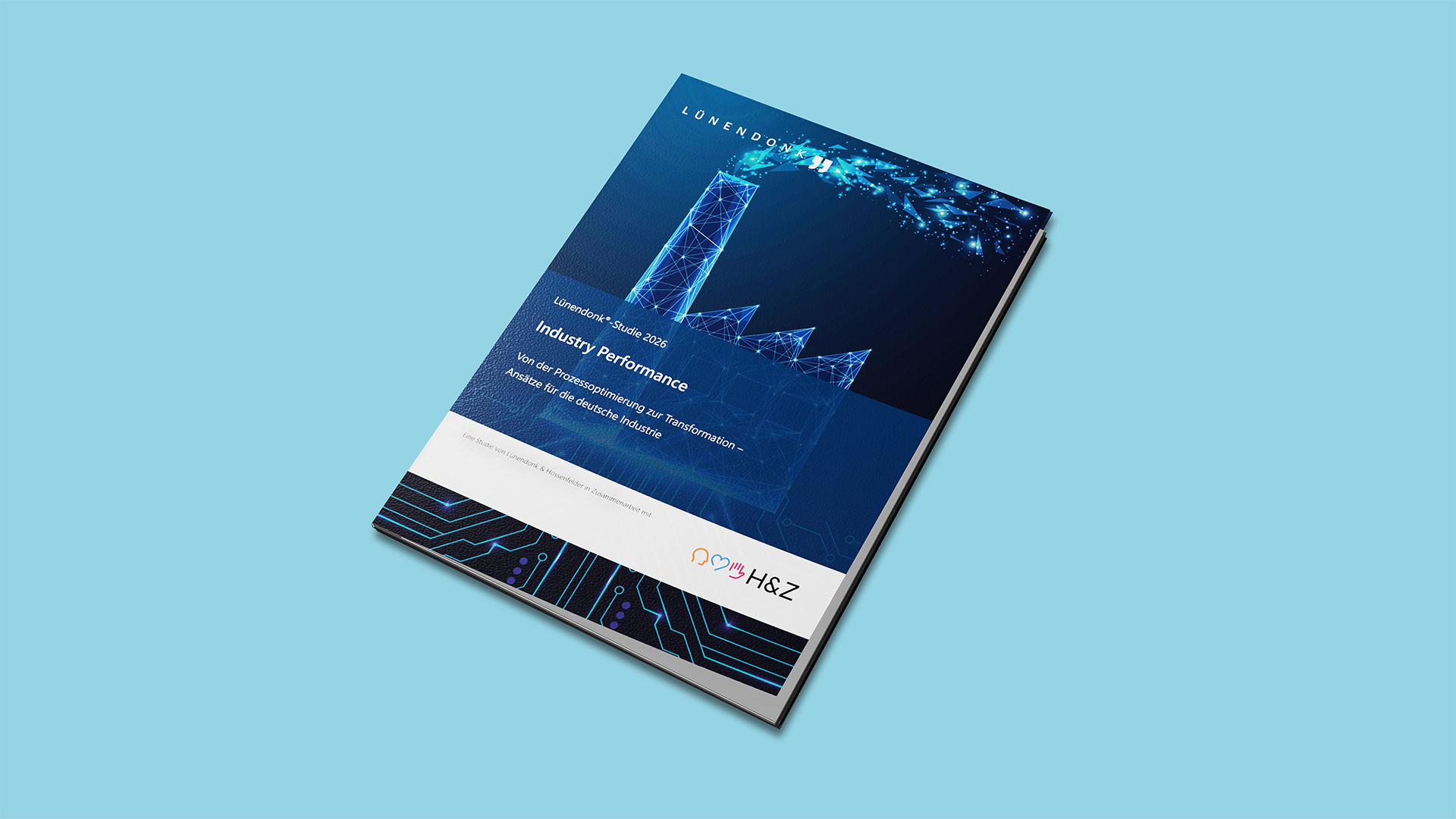
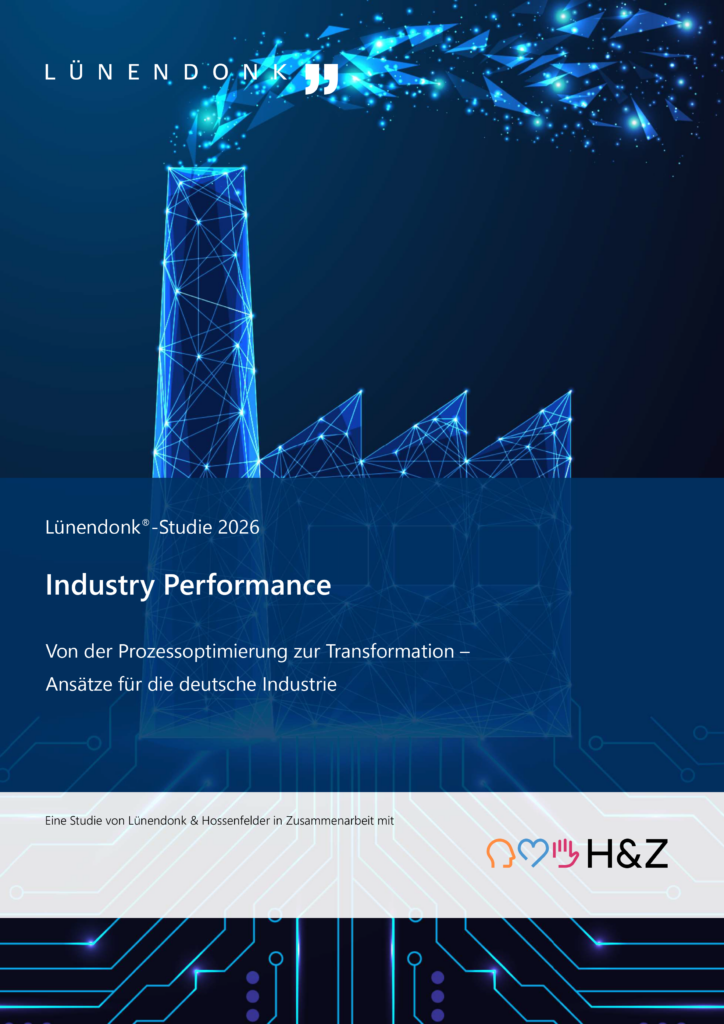
Lünendonk Study 2026: Industry Performance
This study by Lünendonk and H&Z sets out evidence-based approaches for German industry to strengthen its operational performance and build resilience.
The German production industry is under pressure. Many companies have worked on improving their efficiency for years. However, it remains to be seen whether these improvements will be sufficient to navigate the next phase of transformation.
Our study, conducted in collaboration with Lünendonk & Hossenfelder, begins by taking stock of efficiency programmes and growth strategies, the progress of digitalisation and the use of AI. We examine measures to enhance the resilience of supply chains and to build up skills, assessing how future-proof Germany is as an industrial location.
The analysis goes beyond the status quo and delves deeper into the root causes. The data is based on interviews with decision-makers from the German production industry, who were surveyed between February and April 2026.
More than half of those surveyed…
- …see the biggest obstacle to transformation within their own organisations, not in the technology itself.
- … do not have a single productive AI use case.
- … consider further cost reductions and efficiency improvements to be necessary.
In addition to the key drivers of growth, the study highlights a Success Story that H&Z has achieved with Brückner Maschinenbau. Using a 360° analysis, we established clearer structures and leaner processes, with the aim of embedding performance as an ongoing system.
WHAT TO EXPECT?
-
The current state of the German production industry: What have efficiency programmes achieved?
-
Strategic levers for growth and performance
-
Digitalisation and AI in production: the gap between aspiration and reality
-
Challenges and measures for a resilient supply chain
-
Organisational prerequisites: skills development, cultural change, governance
-
Future prospects for Germany as an industrial hub
-
Success story: H&Z optimises procurement, quality and project management at Brückner Maschinenbau
DOWNLOAD OUR STUDY NOW
Download the full paper, including an analysis of why organisational structures are often no longer optimally designed and specific approaches to optimising overhead costs using industry benchmarking.