Value Creation at DEALSOURCING 2026
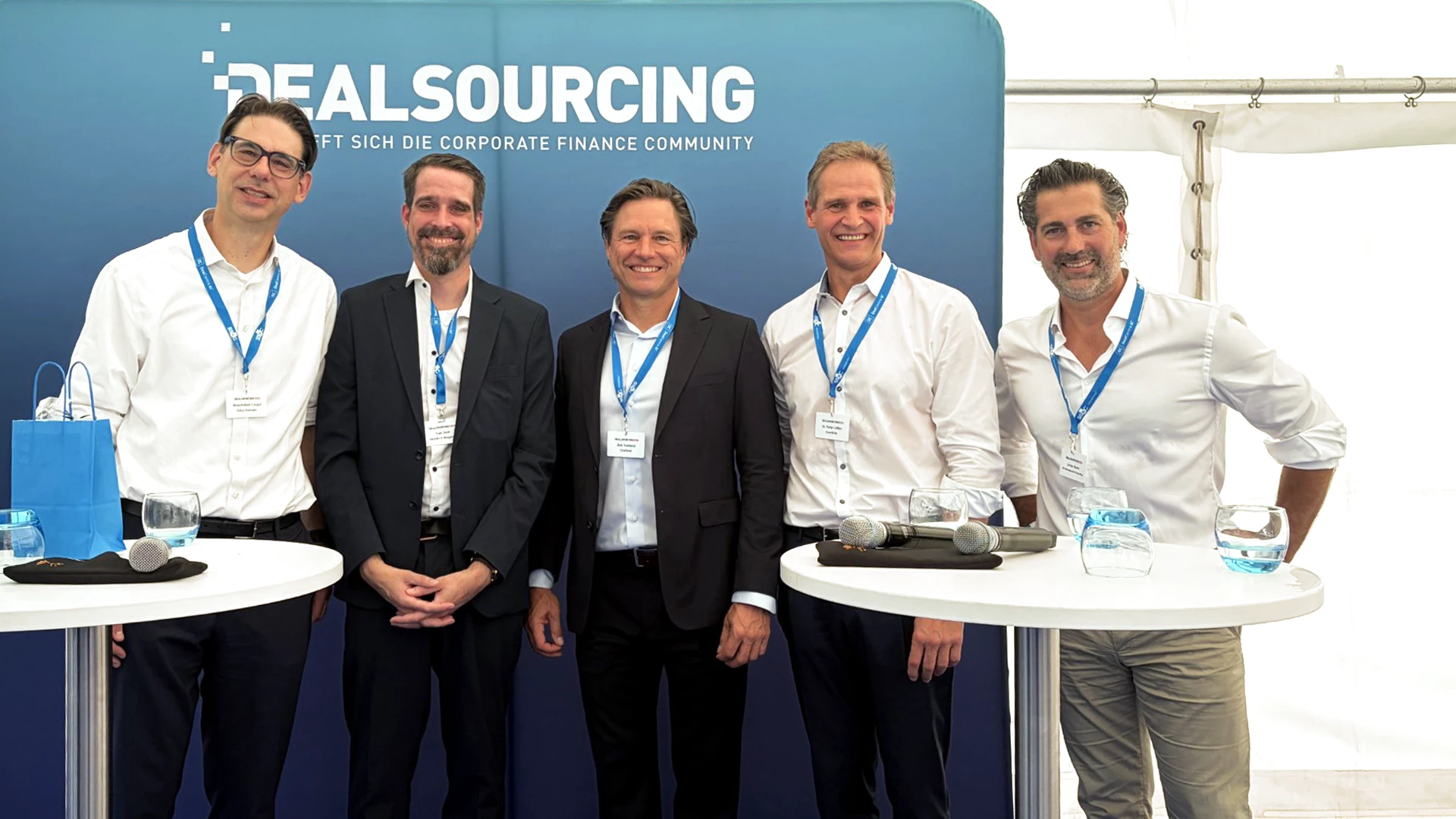
H&Z joined Triton Partners, Clairfield International and Keenfinity to discuss putting value creation into practice. We examine the operational decisions behind delivery.
A value creation plan commits a business to results. Delivering them requires decisions about priorities, resources and how people will work together while keeping operations running. We believe those decisions belong in the strategy from the outset.
We explored that challenge at DEALSOURCING 2026, where Jonas Harm was joined by Maximilian Coqui of Triton Partners, Dirk Freiland of Clairfield International and Peter Loeffler of Keenfinity Group. Their workshop, “How a Value Creation Strategy Is Put into Practice”, drew on Keenfinity’s experience to discuss execution.
For investors and management teams, the challenge is to connect financial expectations with the work required to meet them and sustain the improvement.
RETURNS DEPEND ON OPERATIONAL IMPROVEMENT
In a selective mergers and acquisitions (M&A) market, pressure on financing and exits puts greater emphasis on operational improvements as a source of investment returns.
That puts the assumptions behind a business plan under scrutiny. An expected margin improvement needs identifiable changes in costs, pricing, productivity or the way the business operates. Each change carries requirements, dependencies and consequences for the people responsible.
Our view is that a value creation strategy should make those requirements visible early. A savings target may depend on engineering capacity, supplier negotiations or investment in equipment. Until the plan accounts for those dependencies, the timing and cost of delivery remain uncertain.
PRIORITIES, OWNERSHIP AND MEASUREMENT
Prioritisation means deciding what the organisation has the capacity to deliver. Launching several initiatives at once can create competing demands on the same people. The financial case needs to account for that constraint.
We favour a plan that connects each proposed improvement with an accountable owner, the necessary resources and an expected financial outcome. Together, those details give leadership a basis for deciding what starts first and what must wait.
Ownership also needs authority. A manager responsible for reducing costs may depend on decisions from operations, engineering or finance. The plan should establish how those decisions will be made and how unresolved issues reach the right people.
Measurement deserves the same attention. Identifying an opportunity, agreeing an action and recording a financial benefit represent different stages of progress. Keeping those distinctions visible helps management assess what the programme has delivered and where further work is needed.
THE KEENFINITY CASE AT DEALSOURCING 2026
Keenfinity illustrates the demands of delivering improvements while establishing an independent business. Following its separation from Bosch, the company needed to replace inherited procurement structures while maintaining operations.
Our work with Keenfinity spanned procurement categories and manufacturing sites. Procurement, operations, engineering and finance collaborated on initiatives addressing costs, performance and supplier relationships. Implementation progressed alongside the development of the independent function.
Keenfinity exceeded its business plan’s savings assumptions. The programme also established an independent procurement organisation and strengthened collaboration across functions.
For us, the broader implication concerns how to organise delivery during change. Teams need to achieve financial improvements while establishing the responsibilities and working relationships that support future performance. Treating organisational development as a prerequisite for every improvement risks delaying work the business already needs.
Procurement provides the example here. The management challenge extends across any function expected to improve performance while changing how it operates.
ESTABLISH THE CONDITIONS EARLY
Investors and management teams need a shared understanding of what the business can deliver within the proposed timetable. That requires discussion with the people who understand its operations, including the constraints that financial modelling alone cannot resolve.
Early involvement gives those teams a chance to test assumptions and influence the plan. It also helps identify competing demands before they become delivery problems. A production team, for example, may need to balance a cost initiative against customer commitments and capacity limits.
The people responsible for implementation need to understand the expected outcome and have a practical say in achieving it.
Leadership then needs to maintain the conditions for delivery: resolve competing priorities, make decisions promptly and review evidence of progress. Adding initiatives will achieve little if existing work remains blocked.
SUSTAINING THE IMPACT
A value creation programme should leave the business better able to manage its performance. Alongside the financial result, we should assess whether responsibilities are clearer, decisions happen sooner and teams can sustain improvements.

“
The focus on execution at DEALSOURCING 2026 provides a useful starting point. For us, a credible strategy connects the investment ambition with the operating decisions required to fulfil it. Its strength becomes visible in what the business can consistently deliver.
“