Transatlantic Defence Accord
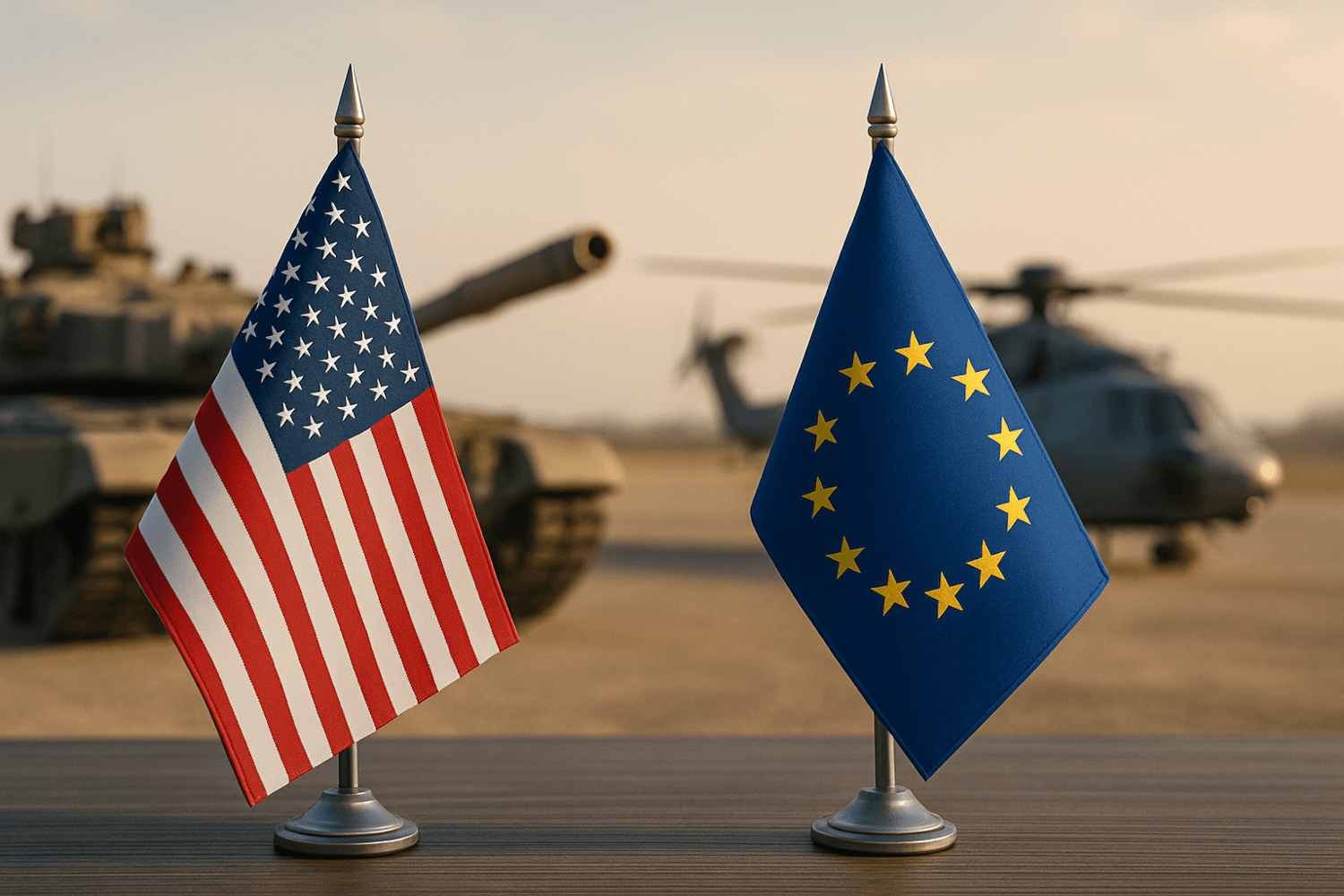
This agreement enhances collaboration between Europe and the US, enabling faster access to critical defence technologies and joint ventures.
FROM TRADE POLICY TO STRATEGIC CAPABILITY
When US President Donald Trump recently praised the new tariff agreement between the United States and the European Union, he focused less on the technicalities and more on the numbers. According to him, Europeans would now buy “military equipment worth hundreds of billions of dollars” from American manufacturers.
While the figure rumoured to exceed $600 billion may be inflated for rhetorical effect, it reflects a strategic truth: Europe’s defence spending is increasing rapidly. And in some critical capability areas, US systems remain the preferred option.
Behind the headlines, the renewed EU-US tariff deal sends a quieter but more impactful message: cooperation is getting easier. The agreement removes longstanding trade irritants and opens a more pragmatic path for industrial partnerships, including in sectors relevant to defence and security.
WHY THIS COMPROMISE MATTERS
Although the agreement officially concerns tariff exemptions on industrial products such as steel and aluminium, its significance is broader. By reducing red tape and reinforcing transatlantic alignment, it supports faster, more efficient collaboration between European and American partners – particularly in high-tech industries that span both civil and military domains. For at least three reasons the agreement is a step in the right direction:
1. Faster access to critical technologies
Many defence projects today are built on technologies developed globally or collaboratively. Streamlined trade procedures help procurement and R&D teams gain access to these components faster and with fewer bureaucratic hurdles.
2. Lower friction in joint industrial ventures
Complex customs procedures and tariff uncertainties have historically slowed joint ventures between European and American Defence firms. With this compromise, cross-border projects (whether in air, cyber, or electronics) become easier to set up and scale.
3. A stronger focus on shared strategic goals
By removing legacy trade tensions, both sides can now redirect their attention toward common priorities: securing supply chains, investing in future capabilities, and maintaining technological advantage in an increasingly contested world.
A $600 BILLION SIGNAL? BETWEEN RHETORIC AND REALITY
Trump’s reference to “hundreds of billions” may have drawn scepticism, but current market dynamics suggest it is not far from to data from the Stockholm International Peace Research Institute (SIPRI), the US share of arms exports to European NATO members has risen from 52% (2015–2019) to 64% (2020–2024). European nations are turning to US defence platforms not out of political preference, but out of operational necessity.
Systems such as the F-35 fighter jet, CH-47 Chinook heavy-lift helicopter, or the Typhon missile platform offer capabilities currently unavailable in Europe – especially regarding range, digital integration, and mission flexibility. German Defence Minister Boris Pistorius openly acknowledged this in July when he signalled interest in Typhon, citing its superior reach compared to anything currently produced in Europe.
ENABLING STRATEGIC READINESS THROUGH SIMPLIFICATION
By removing friction, The EU-US tariff agreement facilitates access to essential technologies, reduces the cost of cooperation, and accelerates innovation on both sides of the a world where readiness depends on speed, agility, and shared capabilities, this compromise is more than a diplomatic success. It is a strategic enabler and one that Europe’s Defence industry should actively use.