Cost Pressure Is Rising Sharply – But Most Companies Are Flying Blind
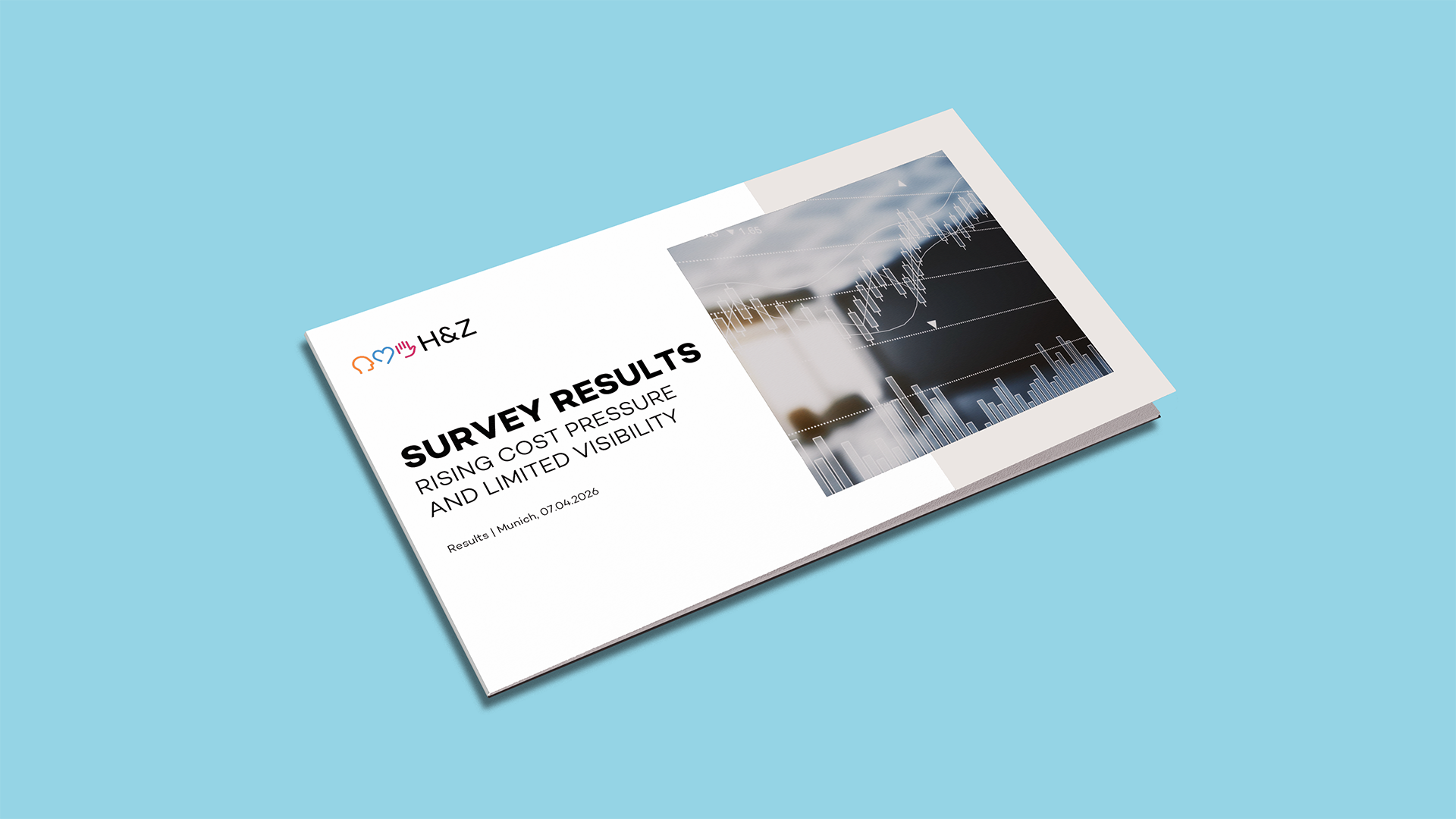
The newest H&Z Flash survey shows, that cost pressure is rising, EBITDA visibility is limited, and many industrial companies remain only partially prepared.
Industrial companies are facing a clear shift in how geopolitical tensions affect their business. The strongest signal from our flash survey is not supply disruption alone, but broad-based cost pressure combined with limited financial transparency and only partial organisational readiness.
Around 95% of companies expect rising energy and operating costs. At the same time, 36% are not yet able to quantify the expected EBITDA impact. While many organisations are already taking action, the response remains focused primarily on defensive measures such as cost reduction, pricing adjustments and short-term margin protection.
This creates a clear implication for CPOs: the challenge is no longer just recognising geopolitical risk, but translating exposure into quantified impact, prioritised decisions and structural resilience.
Key insights
- Cost pressure is widespread: Rising energy, operating, procurement and logistics costs are the dominant impact pattern across industrial companies.
- Visibility remains limited: A significant share of companies cannot yet quantify the EBITDA impact, pointing to weak transparency and planning visibility.
- Margin pressure is tangible: Many companies already expect EBITDA deterioration, although the degree of exposure varies.
- Responses are still largely defensive: Most organisations are focusing on cost and efficiency programmes, pricing and short-term protection measures rather than broader structural transformation.
- Preparedness remains a clear gap: Only a small minority consider themselves very well prepared, while most see themselves as only partially prepared for geopolitically driven cost and supply chain risks.
Industry perspectives
While cost pressure is widespread, response patterns differ across industries:
- Automotive: stronger focus on supplier and footprint strategies
- Mechanical engineering: impact on investment and capacity decisions
- Electronics / high-tech: higher uncertainty in financial impact
- Chemicals: particularly high exposure to cost pressure
The results point to a clear management priority: companies need to move from general risk awareness to measurable exposure transparency and targeted action. For CPOs, this means strengthening cost visibility, improving decision-making under uncertainty and building resilience where short-term defensive measures are no longer sufficient.