Raising EBIT Standards
As the automotive supplier industry faces unprecedented pressures, achieving a 7% EBIT margin is crucial for future viability and investment access.
Why margins must rise – and fast
Suppliers are being squeezed from all higher interest rates and rising input costs to capital-intensive EV investments and limited OEM support, many mid-sized players find themselves caught in a structural squeeze. And in a world of tightening refinancing conditions, low EBIT is no longer just a performance issue — it’s a refinancing risk.
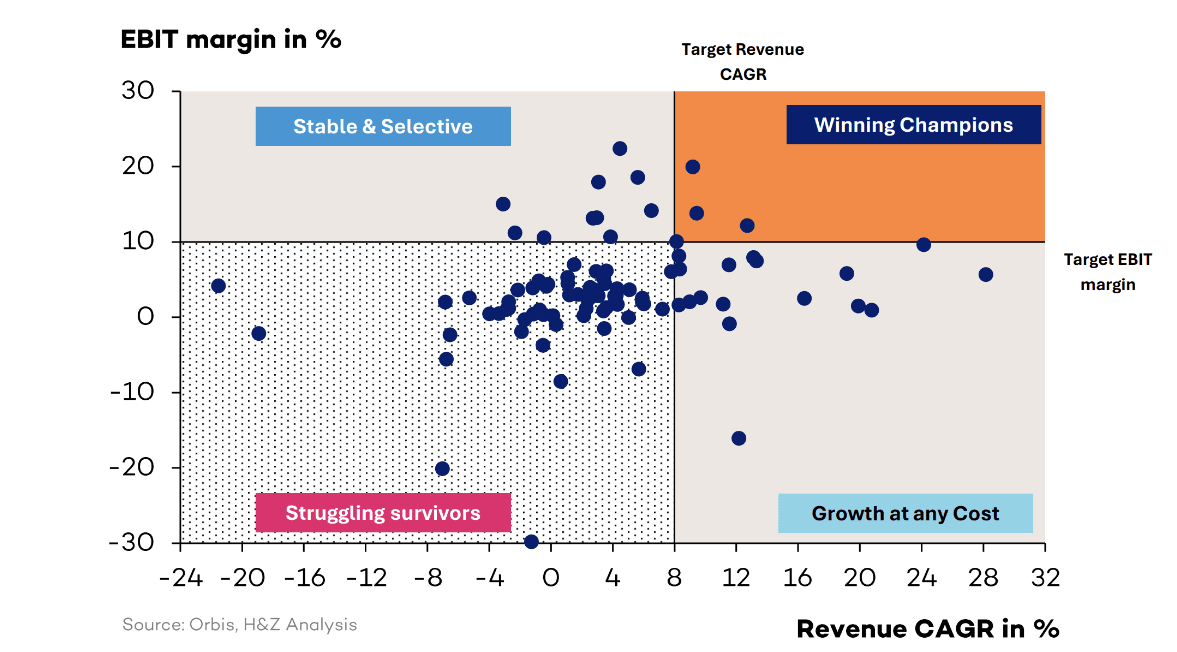
A new profitability logic has emerged:Only suppliers that generate 7% EBIT or more can secure the equity and debt financing needed to transform, grow, and survive.
What the numbers say
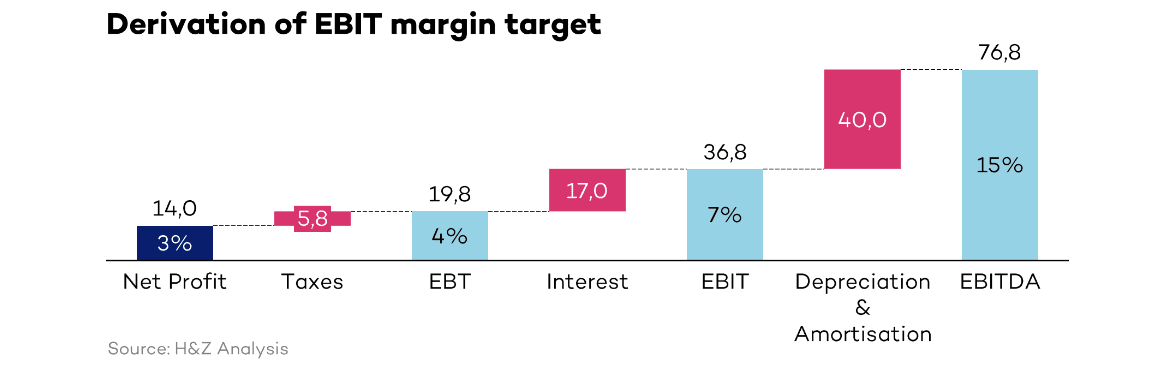
Let’s look at a typical supplier scenario:
- Revenue: €500M
- Equity ratio: 30%
- Target ROE (return on equity): 15%
To achieve this, the company must generate at least €36M EBIT – which equates to a 7% EBIT margin.
But most suppliers in our study fall short. Margins of 3–5% no longer satisfy investors, nor do they leave enough room for future-proof investments in electrification, software, or operational resilience.
The hidden killer: Bleeder programmes
So why are margins stuck?Often, the problem isn’t revenue — it’s the portfolio study uncovered a striking pattern across dozens of suppliers:The bottom 20% of a supplier’s programmes often destroy more EBIT than the top 80% can generate.
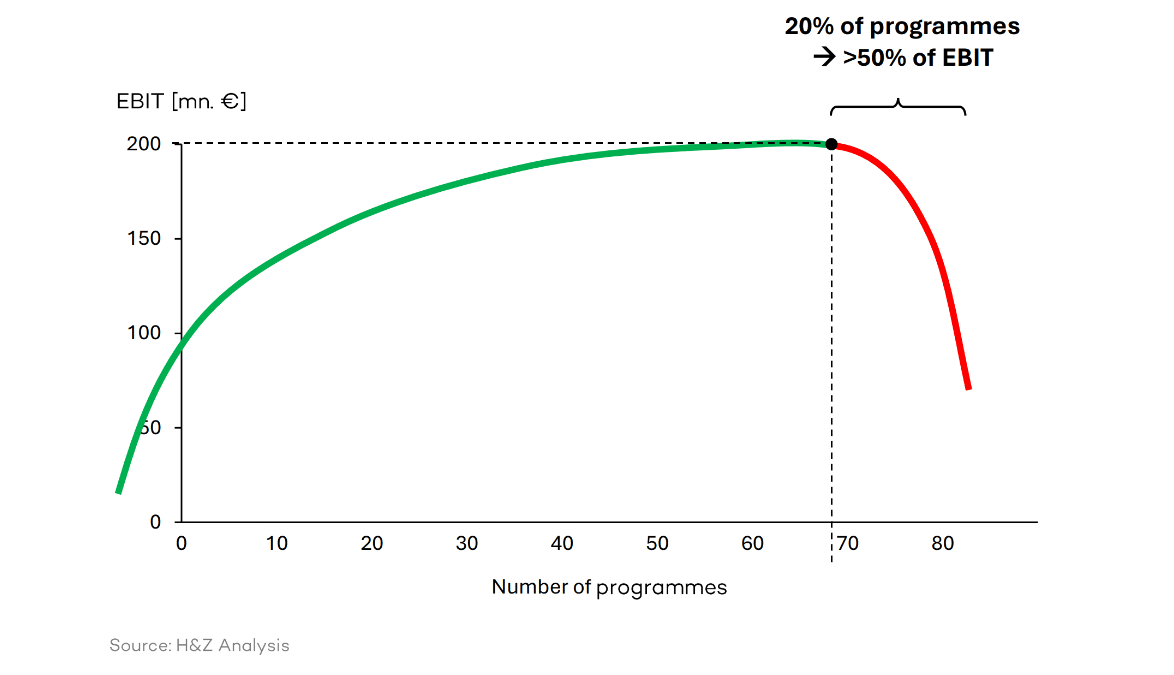
These “bleeder programmes” are unprofitable product lines that consume resources, drag down EBIT, and stay hidden due to lack of programme-level decisive action, these bleeders silently erode profitability – and endanger refinancing readiness.
The path to 7%: It’s not just theory
This is not a theoretical exercise. It’s a strategic imperative.H&Z’s EBIT-first methodology helps suppliers identify exactly which programmes, cost drivers, and structural issues are blocking profitability – and then activate six targeted EBIT levers, including:
- Pricing & claim management
- Procurement & cost optimisation
- Portfolio clean-up & product lifecycle strategies
- Overhead & footprint rightsizing
- Supply chain performance
- Working capital improvement
In most cases, EBIT uplift of several percentage points is achievable within 6–12 months — if the right levers are activated.
Why this matters now
A 7% EBIT margin isn’t a stretch ’s the new minimum requirement to stay relevant, solvent, and investable.
In 2025, EBIT is more than an accounting metric — it’s a signal of financial resilience and strategic that fail to adapt risk being cut off from capital, unable to transform, and exposed to market consolidation.
H&Z’s take: Margin strategy is survival strategy
At H&Z, we support suppliers hands-on to move beyond symptom treatment and build structural margin strength. Our EBIT bridge model, Pareto-based programme analysis, and fast-cycle improvement sprints deliver real margin impact — you’re sitting at 4% and unsure how to climb higher, or preparing for refinancing and need to defend your position:Now is the time to re-anchor your EBIT strategy around a 7%+ target.
Want to know where you stand?
Let’s benchmark your EBIT potential and define the path to margin resilience.
Frequently asked questions
Why is 3–5% EBIT no longer sufficient for automotive suppliers?
Because it no longer meets the financial expectations of equity and debt investors. Rising capital costs, margin pressure, and transformation needs require at least 7% EBIT to ensure refinancing, financial resilience, and investment capability.
What is the link between EBIT and return on equity (ROE)?
EBIT is a core driver of net profit, which in turn determines ROE. To achieve a typical ROE of 15%, most suppliers must generate an EBIT margin of 7% or more — depending on capital structure and tax burden.
What are “bleeder programmes”?
These are unprofitable product lines that generate negative or near-zero EBIT. Often overlooked, they can silently erode company-wide profitability. Identifying and eliminating bleeder programmes is a fast and effective way to improve margins.
Can mid-sized suppliers realistically reach 7% EBIT?
Yes – but only with clear transparency and decisive action. H&Z has helped numerous suppliers activate targeted EBIT levers across pricing, procurement, portfolio, and operations to achieve 2–4 percentage points of margin uplift.
What is the first step to improving EBIT?
Start with a structured EBIT bridge and programme-level profitability analysis. This reveals where margins are leaking — and where action will have the highest impact.