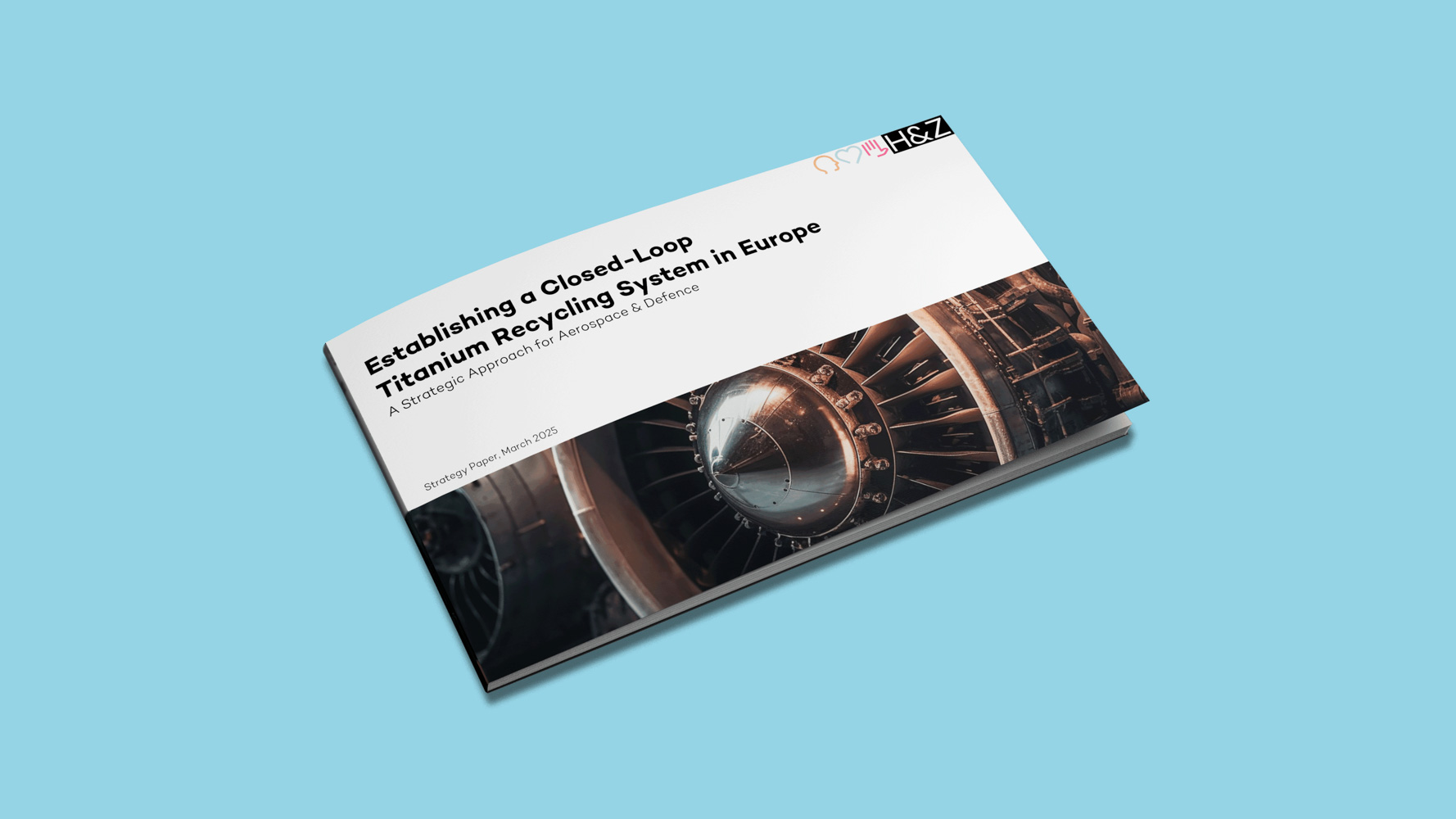
Recycling Titanium in Europe
Discover how advanced recycling of titanium can enhance industrial resilience in Europe’s aerospace and defense sectors while reducing dependence on imports.
A New Approach to Europe’s Industrial Resilience and Military Defence Capability
The EU’s Critical Raw Materials Act designates titanium as a strategic resource, setting a target for 25% of titanium demand to be met through recycling by 2030. However, current recycling capacity falls short of this goal. Producing titanium domestically remains challenging, and reliance on foreign producers exposes Europe to supply volatility. Expanding closed-loop recycling capabilities are crucial steps toward ensuring a secure and sustainable long-term titanium supply.
IN THIS STRATEGY PAPER, YOU WILL DISCOVER:
- Why titanium is essential for aerospace and defence and its critical role in the building of high-end aerospace and defence components
- Which stringent quality and regulatory standards titanium needs to meet to be deemed aerospace-grade
- Why Europe’s external reliance on foreign suppliers poses a significant risk to supply chains
- Why Europe’s recycling capabilities are currently falling short, limiting the region’s ability to reduce its reliance on foreign imports
- Why establishing a closed-loop titanium recycling system in Europe is the most viable long-term solution
WITHOUT IMMEDIATE ACTION, EUROPE’S AEROSPACE SECTOR WILL REMAIN EXPOSED TO SUPPLY RISKS, THREATENING LONG-TERM INDUSTRIAL RESILIENCE AND STRATEGIC AUTONOMY.
Titanium recycling stands out as the most viable long-term solution for addressing supply chain challenges in Europe’s aerospace sector. The reasons for this are three-fold:
- Producing titanium from ore is complex and resource-intensive
- Aerospace manufacturing generates high scrap rates, presenting untapped opportunities for recycling
- Advances in recycling technologies are paving the way for a more sustainable and self-sufficient supply chain