Procurement’s New Reality
The recent 15% tariff demands procurement leaders reassess sourcing strategies and enhance operational agility to navigate a changed landscape.
Why Procurement is Front and Centre in Trade Agreements
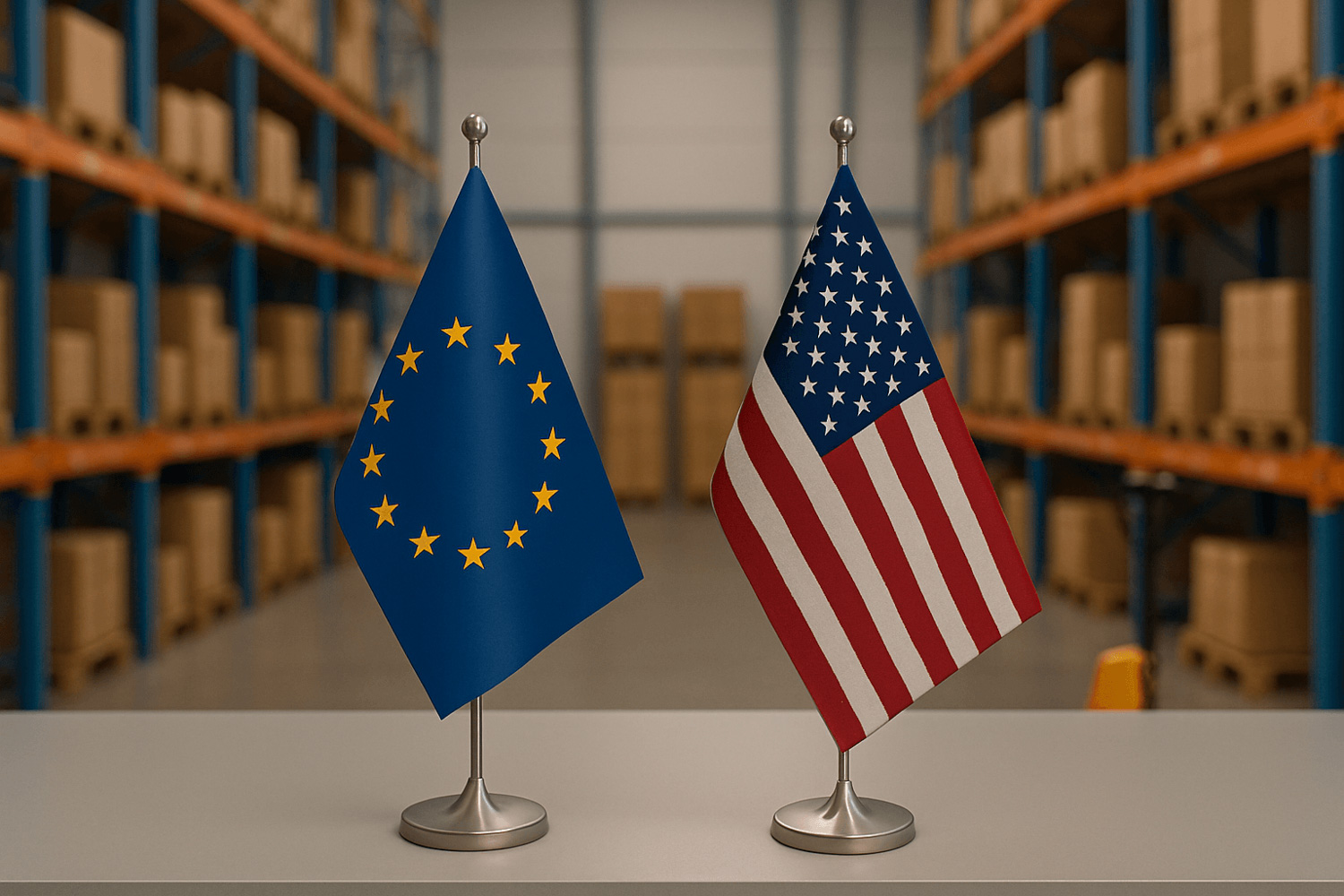
On Sunday, July 27, 2025, the European Union and the United States signed a long-awaited trade agreement. While the headlines focused on politics and diplomacy, procurement leaders should pay very close attention. Why? Because this deal, which imposes a 15% blanket import tariff on most EU-manufactured goods entering the US (and vice versa in many categories), fundamentally alters the playing field for global sourcing.
Procurement is often seen as a tactical function, but trade policy makes one thing very clear: when rules of trade change, procurement is the first to feel the impact and the first that must respond. From supply continuity to cost exposure, supplier relations to compliance, procurement teams are now on the front line of adapting to the most significant transatlantic tariff shift in decades.
At H&Z, we work with global procurement teams every day, and this new trade environment will require quick decisions, strategic foresight, and operational agility. In this article, I will share what this deal means for procurement both strategically and operationally and what CPOs should be doing now to stay ahead.
Strategic vs. Operational Procurement: Two Levels of Impact
Strategic procurement is directly impacted by this agreement. Procurement leaders must reassess their global sourcing models in light of the 15% tariff, which now applies to a vast array of product categories, from industrial machinery and automotive parts to electronics and textiles. For many companies, this tariff wipes out competitive cost advantages and will trigger a review of long-established supplier relationships.
This means:
- Reevaluating which categories can still be sourced from Europe or the US cost-effectively
- Considering alternative regions (e.g., Southeast Asia, Mexico, Eastern Europe)
- Potentially nearshoring or localizing production to avoid duty exposure
-
Using risk-based segmentation to prioritize where to act fast
It’s also important to recognize that the agreement lacks clarity on future tariff reductions or reciprocal relaxations. Procurement needs to build in flexibility and optionality, scenario-modelling various trade paths and investing in diversified supply networks to future-proof operations.
Operational procurement, meanwhile, will feel the changes immediately. Purchase orders for affected categories must be updated to reflect new landed cost calculations. Procurement teams will have to:
- Adjust pricing in real-time
- Update supplier communications
- Ensure customs compliance
- Manage Incoterms and cost-sharing negotiations
-
Prepare for increased documentation and regulatory scrutiny
The tariff is set to take effect on August 7, 2025, meaning procurement functions have just days to get ready. Tactical decisions made now can either mitigate the cost shock or amplify it.
What Procurement Leaders Should Do Right Now
Here are three action areas every CPO should tackle without delay:
1. Review Contracts and Adjust Terms
Start by conducting a rapid review of all supplier contracts in the affected trade lanes. Look specifically for clauses related to duties, Incoterms, and pass-through pricing. Many agreements assume tariff-free movement; those assumptions are now obsolete.
Actions:
- Renegotiate where possible: Can suppliers share the burden?
- Introduce dynamic pricing clauses for future contracts
- Assess whether you (the buyer) or the supplier bears import costs
-
Engage legal and compliance teams to update boilerplate language
At H&Z, we’ve seen clients turn this into a competitive advantage by initiating transparent cost-reduction programs with key suppliers, instead of reacting passively to increased expenses.
2. Rethink Supplier Strategy
The tariff may act as a forcing mechanism to modernize your sourcing footprint. Procurement should:
- Map out exposure by supplier, category, and country
- Identify viable second-source suppliers outside the EU-US corridor
- Evaluate options for local assembly or final packaging to reduce tariff value
-
Engage in dialogues with strategic suppliers about building US-based capacity
For some, this may trigger a full make-versus-buy or localization discussion, not just to dodge tariffs but to increase resilience.
3. Ensure Trade Compliance and Readiness
New tariffs almost always bring new customs requirements, country-of-origin audits, and stricter documentation protocols. Procurement teams need to:
- Coordinate with trade compliance, tax, and legal functions
- Update internal systems with new Harmonized Tariff Schedule (HTS) codes
- Train operational buyers on the new rules
-
Monitor for exemptions or temporary relief clauses in the agreement
Non-compliance, even unintentionally, could mean delays, fines, or reputational risk. It is better to over-prepare than get caught off guard.
5 Key Questions Every CPO Should Ask Today
To help structure your organization’s response, here are five critical questions we recommend all procurement leaders address immediately:
- Which categories in our portfolio are affected by the new tariffs and by how much?
- What are our short-term options to mitigate impact (renegotiation, inventory buffering, alternative suppliers)?
- Are our current contracts and Incoterms clear about who absorbs additional costs?
- Is our customs and compliance infrastructure ready for the new rules on the 7th August?
-
Should we start designing a new sourcing strategy aligned with a more protectionist global trade environment?
Answering these questions won’t solve every problem, but it will ensure your organization is playing offense, not defence.
Conclusion: From Shock to Strategy
The 15% tariff introduced by the EU–US agreement is significant, but it’s not the end of the world. For agile procurement leaders, it’s a chance to drive strategic relevance, enhance resilience, and future-proof supply networks.
At H&Z, we believe procurement plays a vital role in translating policy into action. As Jonas, I urge my peers in the procurement community to see this as an opportunity: to demonstrate value, influence strategy, and shape the organization’s response from the inside out.
Change is inevitable. Competitive advantage is optional. Let’s choose wisely.
If you’d like support in navigating this new trade landscape, from impact assessment to supplier realignment, H&Z’s Procurement and Supply Chain practice is here to help.
Feel free to connect or reach out. Let’s turn uncertainty into advantage.