Unlock Profitability Now
Discover how procurement can reclaim up to 10% in savings and restore profitability for industrial companies amidst market challenges.
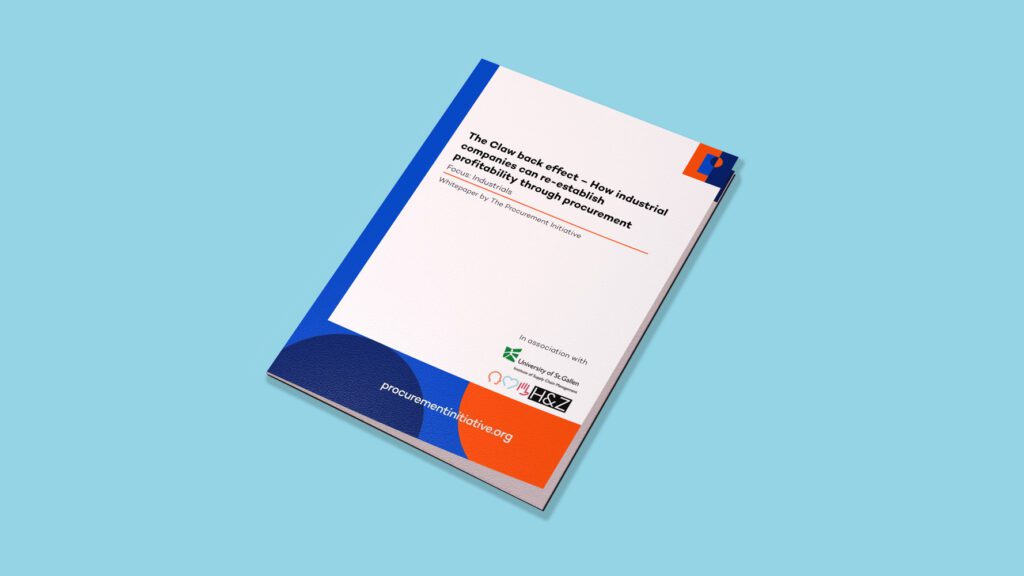
In the wake of unprecedented market volatility, industrial companies face a new challenge: how to restore profitability despite rising supplier prices. In our latest research, we explore how businesses can turn the tables by leveraging the Clawback Effect.

By focusing on procurement as a strategic tool, the whitepaper outlines how companies in the mechanical and plant engineering sectors can recoup up to 10% of their costs. Drawing on a detailed analysis of commodity prices and producer price indices, it provides a roadmap for businesses to renegotiate contracts and reclaim lost margins.
Key Challenge: Navigating the Pricing Gap
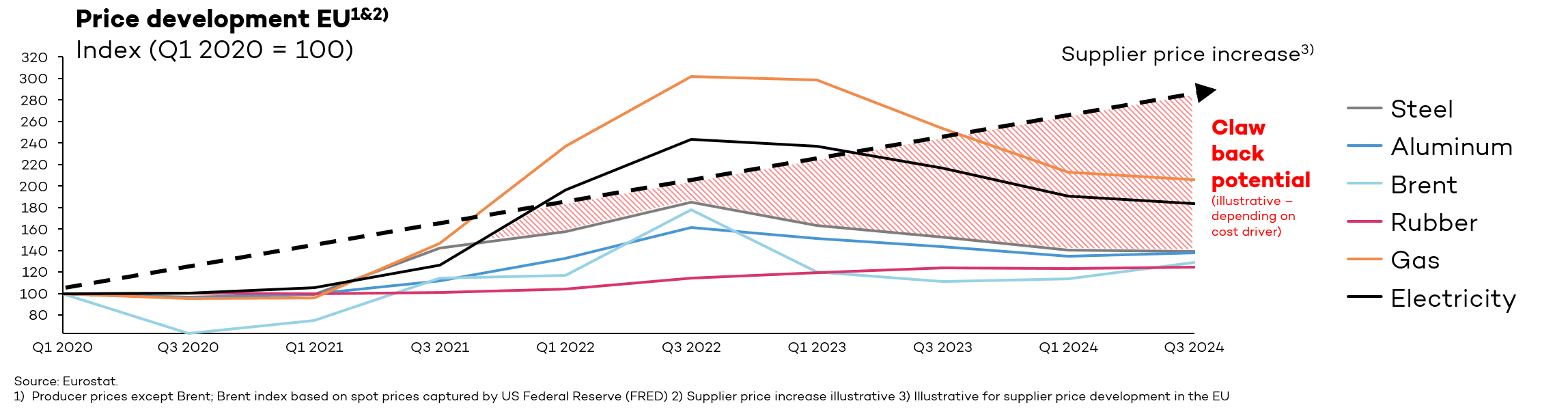
The above graph illustrates the fluctuations in key commodities (steel, aluminium, Brent (oil), rubber, gas, and electricity) from January 2020 to January 2024. This visual representation underscores the recent downward trend in costs, contrasting with the sustained high supplier pricing.
Despite falling underlying costs, suppliers are reluctant to relinquish the increased margins they’ve enjoyed. This creates a critical opportunity for procurement to take action.

Clawback Strategies for Procurement Profitability:
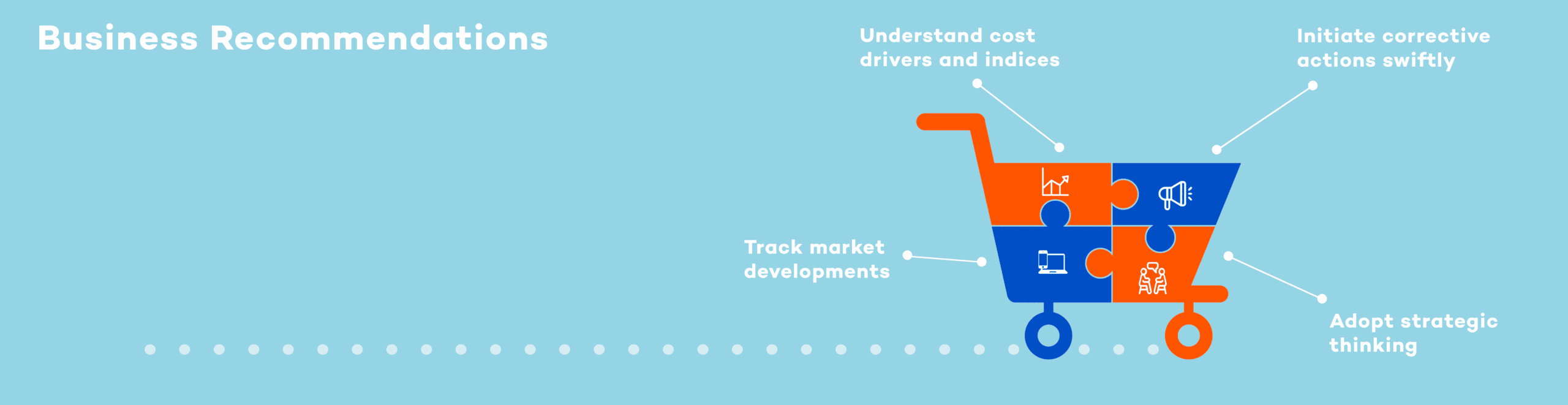
Procurement represents about 50% of spending in industrial companies, making it a critical lever for cost control. The clawback effect allows procurement teams to realign supplier contracts with current market conditions, reclaiming lost margins as raw material costs fall. The whitepaper identifies key actions that teams can employ now.
1. Understand Cost Drivers and Indices
Identify the key cost drivers that influence pricing in your industry. Use relevant indices to gain market insights and track price fluctuations for better decision-making.
2. Initiate Corrective Actions Swiftly
Regularly review contracts and supplier agreements to ensure alignment with current market conditions. Take prompt action to renegotiate terms or adjust pricing models when market shifts are identified.
3. Track Market Developments
Implement digital tools to monitor real-time market trends. Use these insights to stay proactive and respond quickly to shifts in commodity prices and supply chain changes.
4. Adopt Strategic Thinking
Focus on long-term relationships and fair pricing with suppliers to ensure stability. Prepare for market volatility by establishing contingency plans and flexible contract terms.
Our Approach: How We Identified Clawback Opportunities
The research uses a mixed-method approach:
- Quantitative Analysis: Commodity price indices (e.g., aluminium, energy) are compared with producer price indices from 2019 to 2023 to identify cost trends and potential savings
- Qualitative Survey: A survey of 108 companies across the DACH region validates the quantitative findings, offering insights into procurement strategies and cost management
This combined approach provides a clear view of clawback opportunities and helps develop practical recommendations for optimising procurement.
Why This Matters Now:
To re-establish profitability, procurement teams must seize the opportunity to claw back savings by renegotiating contracts through fact-based discussions with suppliers. By acting now, you can reset your cost base and position your company for long-term success in a fluctuating market.
Our Approach: How We Identified Clawback Opportunities
The research uses a mixed-method approach:
- Quantitative Analysis: Commodity price indices (e.g., aluminium, energy) are compared with producer price indices from 2019 to 2023 to identify cost trends and potential savings
- Qualitative Survey: A survey of 108 companies across the DACH region validates the quantitative findings, offering insights into procurement strategies and cost management
This combined approach provides a clear view of clawback opportunities and helps develop practical recommendations for optimising procurement.
Why This Matters Now:
To re-establish profitability, procurement teams must seize the opportunity to claw back savings by renegotiating contracts through fact-based discussions with suppliers. By acting now, you can reset your cost base and position your company for long-term success in a fluctuating market.